There are so many modern digital marketing strategies that can help online marketers in the B2B aesthetics sector focus on finding and acquiring quality customers, generating better leads, and a higher return on marketing spend. Guided by our knowledge and experience, we analysed some of our proven tactics and presented the benefits.
There are so many modern digital marketing strategies that can help online marketers in the B2B aesthetics sector focus on finding and acquiring quality customers, generating better leads, and a higher return on marketing spend. Guided by our knowledge and experience, we analysed some of our proven tactics and presented the benefits.
Challenges injectable aesthetics sellers are facing
Account-based marketing (ABM)
Search engine optimisation (SEO) strategy
Content creation
Social media
Customer relation management (CRM)
Would it be nice to attract new buyers to your e-commerce site? Here are some tactics that can help your online business raise brand awareness, reach new leads and convince buyers to source medical devices from you rather than from anyone else.
Challenges online injectables sellers are facing
During our decades of presence on the market, many online businesses we have met, especially those that supply healthcare professionals and private clinics are notable because they already had a stable number of returning customers.
On the other hand, these clients are not as confident when it comes to converting leads into new customers. How do they do that? Figuratively speaking, this is the million-dollar question (or even a few million)!
In this article, we would like to share a couple of digital marketing tactics that website owners should be aware of when creating their acquisition strategies.
Online sellers’ challenges
Let’s start with the most common problems we recognised:
Earning trust from a healthcare professional or clinic owner is equally hard and important.
These people probably won’t even consider a new supplier without a recommendation.
They don’t have time or patience for your promotion.
They are price-sensitive, and they don’t react very well when you cut discounts they are accustomed to.
Online sellers’ opportunities
Yes, the Healthcare industry is a challenging playground, but it is not all that bad. There are nearly 1000 medical aesthetic clinics in the UK alone, and there is an emerging trend of filler treatments for the male population. Everything indicates that the aesthetic market is growing larger.
There are plenty of new potential buyers of medical devices from your e-commerce site. You just need to convince them you are their best option.
The goal is to create the right marketing mix, and here are some tactics that we found useful.
Account-based marketing (ABM)
You probably already know specific healthcare providers, medical institutions, or doctors that could be your ideal customers, or you can easily find that out. So why waste time and money on advertising to a wide range of the general public?
With ABM, you do the opposite:
Detect and set high-value accounts.
Create hyper-targeted content and campaigns.
Deliver a personalised experience to those most likely to become your customers.
Why?
Because this strategy uses highly personalised campaigns that are intricately designed to engage with your target healthcare institution or professional, meaning you are not at risk of wasting their time or your own.
Benefits:
Narrow audience
High ROI
Direct approach
Sales team involved
SEO and SEM strategies
Let’s not forget one thing you likely have already invested most of your efforts into – your e-commerce website. You want as many healthcare professionals as possible to visit it, and a strategy based on search engine results is one of the ways they could find it.
SEO (Search engine optimisation) and SEM (Search engine marketing) strategies are used to make the best of the enquiries your target audience is typing into their searches.
For example, if they search the phrase “fillers wholesale website Germany” you want your website to be at the top of the result list (Search Engine Results Page, or SERP). The better visibility your website has in search results, the more likely you will attract the attention of prospective customers to your site.
Why?
You don’t want your website to be invisible. The results of one user behaviour study showed that 91% of Google searchers don’t make it to the bottom of the first page of the search results. Clearly, you need to be at the top of the SERP.
Benefits:
Long term visibility of your website
Addressing directly those who are looking for relevant keywords
Learning what people are searching for
Content creation
One of the tactics to improve search engine rankings is creating unique and engaging content. To get the best out of it, you should align your content marketing with your SEO strategy.
Let’s say you found out using your SEO tools that most of your potential customers are searching the phrase “new injectable treatments”. This is a chance to give the answer. Write a comprehensive article with relevant examples and keywords learned from your SEO tactics, and you will get closer to them by converting their search behaviour into site traffic.
The study conducted by HubSpot shows that 70% of marketers rely on content to gain quality leads, and in the case of healthcare B2B marketing, it could be crucial.
Content creation includes both written and visual elements, and it gives information to your audience, meaning it has to be consistent and relevant. Natural, unique, fresh, and creative content is more successful – it is rapidly indexed and ranks higher.
Why?
It is the way to reach those healthcare professionals looking for your service or related topics, this is an important opportunity to give them value, raise brand awareness and build your business reputation online.
Benefits:
Content is in line with your SEO strategy
Gives value to the reader by helping them quickly locate relevant topics through search
Opportunity to build brand reputation
Opportunity to educate your customers
Social media
The primary social media platform for B2B marketers is LinkedIn. Both individual healthcare professionals and owners of private clinics (or office managers depending on a clinic’s internal structure) consider it trustworthy and maintain profiles, unlike on Facebook and Instagram.
LinkedIn is an always growing, open network of professionals you can connect or advertise to until you convert them into valuable leads.
Statistics say that after their ads were viewed on the LinkedIn platform, brands were perceived to be: 50% higher quality, 92% more professional, 74% more intelligent, and 59% more respectable.
That said, we advise you not to waste your resources on social media platforms other than LinkedIn, unless it is part of some specific content strategy.
Why?
There are 8.6 million health care professionals on LinkedIn available for you to start a conversation.
Benefits:
Ongoing communication
Creating community
Advanced targeting options
Customer relation management (CRM)
Customer Relation Management (CRM) is a valuable marketing segment used to manage customer data and build strong business relationships.
Unlike account management, which focuses on segments, CRM collects data from every customer or lead. In short, it is a centralised hub for customer details. It lets you track personal data such as names, phone numbers, but also their purchasing behaviour.
CRM is important for e-commerce websites selling medical devices because it provides data analysis of customer interactions, behaviour, and sales cycles. Thanks to that, your team has the powerful data and can easily deliver personalised information directly to your leads and customers.
Why?
It helps you learn more about your TA, builds trust, and provides a personalised experience to each contact.
Benefits:
Data analysis
Centralises customer information
Customer journey
Personalised communication
Customer retention
Conclusion
We know that balancing sales, procurement, distribution, regulations, and everything healthcare website owners must control is time-consuming. Therefore, here is another piece of advice: you don’t need to do it all by yourself. Consider delegating your digital marketing endeavours to a trusted agency that can reach your business goals for the same time or even faster. Want to learn more about our marketing solutions? Feel free to contact us.
Word-of-Mouth Marketing (WOM) is sometimes all that it takes to achieve success or failure, especially in the healthcare industry where trust is a crucial factor. Many marketers take it for granted as something you can’t affect, but that is far from the truth. In this article, we share our experience of how Online Medical Device Sellers can help their customers become their most valuable communication channels.
Word-of-Mouth Marketing (WOM) is sometimes all that it takes to achieve success or failure, especially in the healthcare industry where trust is a crucial factor. Many marketers take it for granted as something you can’t affect, but that is far from the truth. In this article, we share our experience of how Online Medical Device Sellers can help their customers become their most valuable communication channels.
Customer support
Direct communication
Customer feedback
Mobile-first user experience
Referral and discount options
Does word-of-mouth come naturally, or do businesses have to invest in it? In this article, we shared our experiences of boosting this intangible communication channel and making your loyal customers spread the good word to other healthcare professionals.
It is in human nature to trust recommendations from a reliable person rather than anything else. We know this, statistics confirm it every time. However, we still seem to forget the value of word-of-mouth.
This refers to every industry, but in our experience, word-of-mouth has a special place in the aesthetics industry because healthcare professionals and private clinic owners are probably one of the most doubtful target audiences in B2B marketing.
This means that building trust is the number one priority for every medical device seller. Any satisfied healthcare institution can influence the purchasing decision of a new potential buyer or even a group of prospective buyers.
On the other hand, negative word-of-mouth can have detrimental effects on your business. A single late shipment or an incorrectly sent order could put you at risk of not only losing the trust of a particular healthcare professional but also creating a fast-spreading negative brand image.
That said, marketing, sales, logistics, and procurement teams should join forces and take control of the buyers’ overall impression.
We talked about this with our partners, mostly from the field of medical e-commerce businesses, and analysed together strategies that can push word-of-mouth in the right way. Here is what we found:
1. Supplier’s Customer Support
Let’s start with the most obvious one: a friend in need is a friend indeed.
When an office manager of a private clinic or a healthcare professional himself turns to you and asks for help or complains about a problem, they are almost always emotionally involved – concerned or even angry. While this may seem as a threat, it is actually an opportunity.
The way the seller’s customer support agent handles these emotions is how your customers will continue to feel about your business. Sometimes, your customer support agents don’t need to have an instant solution, but the proper manner in which they communicate:
Listen with patience and empathy
Agree (even if the customer is exaggerating)
Show willingness to do everything you can
Know all the products you offer, regulations, packaging, and stock status.
Show that you are in control (shipment status, delivery estimates, etc.).
Be precise and direct.
Investing in your customer support team’s soft skills and procedures means indirectly investing in your B2B marketing. Next time your buyers share their experiences with other healthcare professionals, they will have positive stories to tell.
2. Direct communication with healthcare institutions
Instead of waiting for your buyers to ask, you can be proactive and deliver information before they even notice there is something wrong.
Let’s say there is a delay in the shipment of goods due to the holiday season. The biggest challenge here is that you need to announce unpleasant news.
Again, try to make an opportunity out of it. Think of it as a new chance for direct communication. Instruct your customer service to write a personalised email or, even better, to make a call.
Your buyers will appreciate this transparent approach because they will have time to get around the situation and still make their clients happy, which is their ultimate goal. Of course, try to make it up to them with a gift card or a discount for their next purchase.
3. Doctors and office managers’ feedback
Knowing what your customers think of your business is knowing what kind of words they are spreading about it.
We know it is hard to convince anyone in the aesthetics industry to spare some time, but with the right tactic, you could win a few minutes of their time and get their opinion.
There are different methods you can use depending on how much you are willing to pay. For example, you can compose a questionnaire (a maximum of 3 questions), send it to your customers by email, and ask them to respond to it in exchange for an incentive (e.g. free shipping for their next order).
Or you can try to get a review for free.
Whatever you do, just remember to be concise and to the point, with clear instructions on what they should do.
4. Mobile-First User Experience
Another positive word-of-mouth you can get is about your website.
Having an intuitive interface that allows users to easily find products and proceed to payments is essential for every e-commerce business. Many online medical device sellers still don’t realise that up to 50% of all B2B enquiries are made from a mobile phone.
This means that you need a responsive website more than ever to take advantage. Investing in your website User Experience (UX) can bring great results in a number of ways. Word-of-mouth may not be so obvious, but it is absolutely important.
5. Referral options
A referral network is like hiring a devoted team of campaigners to drive leads to your company. This strategy uses trusted recommendations from other community members and businesses to increase your customer base.
A discount can be a solid motivating factor. You can offer a two-way discount reward – to the referred customer and to the referrer. This way, your loyal buyer will be motivated to spread the word-of-mouth, and the new buyer will be invited to try out your site. Moreover, if you have a great offer along with a great UX, this can be an optimal experience for your new returning customer.
Keep in mind that this is a more demanding marketing method. If you decide to invest in it, be sure to do everything right:
Plan the program in detail
Decide what the reward should be
Create a landing page with detailed explanations
Create a promotional campaign
Deliver on everything you promised
Referral marketing can bring you new high-value customers and extend your reach in the aesthetics market.
Final thoughts
For healthcare goods online sellers, every activity can be a trigger for positive or negative word-of-mouth, meaning that it is an indirect result of everything you do. Our final tip is to try to think from your buyers’ perspective and have a look at both your e-commerce and the products you are offering. Contact us for more advice!
The COVID-19 crisis has impacted the healthcare industry and the already present need for change in conducting its procurement processes. Here is an overview of the main benefits for healthcare goods online sellers if they choose to join an E-procurement plan.
What is E-procurement?
E-procurement is a web-based interface designed for multiple parties to enable the sourcing, purchase, payment, and delivery of supplies and services.
The main goal of implementing an E-procurement solution is to centralise and automate interactions of the entire procurement process, from acquisition to the buyer’s doorstep.
The why of E-procurement solution in the healthcare industry
The E-procurement business model has gained traction because of its overall efficiency. A one-stop-shop model, typically provided by third parties with relevant expertise, E-procurement is fundamentally an online (i.e. accessible anywhere) and data-driven solution. The general cost-reducing and operational improvement characteristics of E-procurement enables diverse stakeholders to tap into an already designed and developed supply chain system, instead of heavily investing in creating their own from the ground up.
The main advantages of including an E-procurement solution are the following:
Transparency and efficiency
Cost-efficiency
Data-driven analytics
All around Operations Management improvement
An E-procurement solution can offer a digital environment for everything from: supplier sourcing and contract creation, inventory visibility, streamlined payment and settlement, order tracking, and auditing.
We will now look into each of its aforementioned business-developing advantages.
Healthcare industry E-procurement paradigm
Healthcare industry organisations and businesses have succeeded in creating business driving benefits by choosing to add an E-procurement business model to the enterprise operations. Having looked into E-procurement in general, let us now focus on the benefits it brings to healthcare professionals and their suppliers.
1. Transparency and efficiency
The Healthcare Industry in the US, EU and other parts of the world is a traditionally heavily monitored business market with various shifting factors to be accounted for in its business conducting strategies. The legal and ethical regulations loom large for all the stakeholders of aesthetic industry professionals. Hence, transparency and efficiency are at the top of the criteria for any business considering upgrading its procurement model. E-procurement offers free and easily accessible information, thus enabling more transparent and reliable procedures.
Vendor information is stored and centralised, thus making it easier for the healthcare industry stakeholders to track their compliance with shifting relevant regulations. As with other digital systems, E-procurement allows for standardisation of procedures, reducing the potential for human errors and the time each task requires.
2. Cost-efficiency
One of the core goals of procurement is to discover competitive prices. With an E-procurement solution, this goal is achievable because of its diversified nature.
According to the EBRD report, E-procurement drives efficiency gains by facilitating broad market access to goods, improving competitive advantage, and decreasing administrative burden and operational costs. By offering a one-stop-shop way of doing business, E-procurement offers easily manageable and entirely digitally sourced information and services, resulting in better-informed options for all business parties involved.
3. Data-driven analytics
E-procurement has the proven ability to enable health care professionals, suppliers, and manufacturers to communicate with clearer understanding of the business and patient-driving patterns that define their relationships.
An E-procurement solution enables medical e-commerce businesses to make informed, reliable, and time-sensitive decisions that ultimately serve the end-users of goods and services in a more holistic and needs-driven way.
By utilising and participating in an E-procurement model, all parties involved can build end user-oriented systems. By gaining comprehensive insights through real-time data, this type of procurement enables all the involved parties to make informed decisions and discover how to offer more unique products, services and patient care.
Medical product suppliers can lead their business development strategies by better understanding the client demand. This kind of approach enables them to strengthen existing business relationships and locate previously unseen market opportunities. For website owners, data collected at the patient level can offer insight informing price control, and in particular treatment outcomes thus contributing to all-around better care provided by all involved parties.
Additionally, the healthcare industry stakeholders can significantly improve their internal and external communications by utilising a comprehensive approach to procurement. According to the latest studies, healthcare professionals can advance their communication methods in a meaningful manner. This finding pertains to both acute patient care and the communication with the suppliers, with all involved parties greatly benefiting from timely and accurate information.
4. All around Operations Management improvement
Reduction in the operational complexities typically found in healthcare industry supply chains are net benefit from E-procurement solutions: from environmental advantages gained in waste management due to paperless processes, to improved inventory visibility from the built-in tracking systems in a digital solution.
Since 2015, the greening of the health sector has been on the UN’s agenda for worldwide improvement. Paper-based procurement procedures are among some difficulties noted in reducing environmental costs of healthcare industry services and business.
Operations are more efficient in regard to the tracking process of orders, payments, and customer service. Fulfilment accuracy and on-time deliveries are significant pain points that can be better managed. Each of these examples have a positive impact on an enterprise’s financial performance.
By introducing an E-procurement business model, health care professionals can advance each of the areas noted above. A highly competitive aesthetic industry business that can respond to the changing market environment and assume a proactive role in spearheading innovative digital processes is ultimately more adaptable and thus better able to react to contemporary global challenges.
COVID-19 perspective
We witnessed how COVID-19 has brought challenges to all healthcare industry stakeholders, requiring fast policy and procedural changes to address obstacles not expected to be relevant for many years to come. While the demand for goods and services skyrocketed, supply chains and service delivery models needed to quickly adapt to keep pace. Globally, healthcare professionals and online businesses were forced to adjust their approaches to suboptimal processes they had often accepted as immutable. Budgets also needed complete overhauls to address the new normal of healthcare procurement and patient services.
The supply chain became the prevalent issue with E-procurement recognised as the solution to cost-savings, and operational impediments. What will hopefully emerge as the most significant improvement change is for online businesses to have a more comprehensive supply selection, thus enabling the healthcare industry to turn to E-procurement more than ever before.
All stakeholders in the supply chain can now offer or find whole categories of relevant competitively priced goods, and to have an end to end visibility, regardless of their position in the chain.
Although the procurement procedures are yet to be fully transformed, during the global pandemic, E-procurement helped alleviate more than just the need for cost reduction. It effectively enabled healthcare industry stakeholders to continue their work of helping other businesses and clients in their moments of greatest need.
Final notes
E-procurement is proving to be a reliable and business-driving solution for healthcare industry professionals and suppliers. By delivering alternative solutions for otherwise resource-consuming and environmentally unfriendly procurement processes, E-procurement enables businesses to stay informed and conduct their work more profitably.
Cost-efficiency, end to end transparency, and data-based insights all lead to businesses and practitioners becoming more resilient and up to date.
Are you considering implementing the E-procurement business model? Contact us, and we will provide you with all the information you need.
Navigating the complexities and demands of e-commerce can be challenging, especially for online pharmaceutical businesses. We created this review to connect all the major points of the ‘GDP Guideline – Medicinal Products for Human Use’ and discuss some of the aspects of compliance, important legislation and regulations in the online pharmaceutical industry. This article is based on our research and should not be taken as an official opinion. Readers should conduct their own research and consult their own sources. Nevertheless, we hope the points we cover will help you as you consider this complex topic.
How and why does the European Medicines Agency (EMA) regulate distribution?
The pharmaceutical industry and its products are one of the most heavily regulated areas of production, which is only rational since they are fundamental parts of public healthcare. It is not out of place to underline that safety, quality, and efficacy are highly monitored aspects of a product, which calls for careful control of all stages of its lifecycle. In addition, having robust systems in place to prevent falsified medicines from entering the legal supply chain is mandatory for all licensed wholesale distributors.
Scope of influence
It is important to note that GDP only applies to medicines, as well as active and other pharmaceutical ingredients that are in their composition. Physical pharmacies are now only one channel of conducting business in order to sell medicines online and achieve a wider patient reach, it is necessary to own a digital version i.e. and online pharmacy and comply with GDP demands.
Categories that do not fall within this scope are medical devices, food supplements, biocides, or cosmetics. These groups of products are controlled to a much lesser degree, and the flow of such goods is not monitored under the GDP.
Regulations that the distributors must follow
Good manufacturing practice (GMP) and GDP are aspects of quality assurance exclusively for medicinal products (MPs) within the territories of the European Economic Area (EEA).
In a way, GMP dictates the level of quality of an MP, and GDP maintains it. Many obligations are placed upon the manufacturer, and others on the holders, importers, and distributors. GDP requirements are very similar to GMP terms for manufacturers regarding the storage of medicinal products.
Activities like procuring, holding, supplying, or exporting make up the wholesale distribution of medicinal products, apart from providing them to the public. In addition, any person acting as a wholesale distributor must have a wholesale distribution authorization.
Distribution is an integrated part of the supply-chain management of pharmaceutical products. It, therefore, has its role to play in maintaining the commodities’ attributes while they make their way to the end consumer. EU regulators enforce this with an established legal framework and their interpretations in:
Directives 2001/83/EC (medicinal products for human use) and 2001/82/EC (veterinary use)
Two lists of European Commission guidelines
The two lists of guidelines are divided into two categories that establish requirements for medicinal products for human use and the active substances of those respective medicinal products. Here, we will focus on the first category.
Additionally, the detailed GDP inspection and Certification processes are described here on the EMA/EU commission page.
How can online pharmacies ensure they are compliant with GDP?
Quality maintenance throughout the overall system is the responsibility of the organisation’s management and it requires leadership and skill. Formally, a specific delegate or a responsible person (RP) needs to be appointed. An RP is not any employee – they are required to meet certain qualifications: an educational background (a degree in pharmacy is preferable), training and knowledge on GDP, competence, as well as sufficient experience in the field. This person of authority ensures that the quality management system is implemented and maintained. They must take responsibility if any problems occur.
EMAs’ reworded guideline (dated 05-Nov-2013)
Under EU legislation, authorizations should apply to all distributed products. This process is done separately; companies whose products get approved are Marketing Authorisations Holders (MAHs).
As mentioned in the previous section, the responsible person has to be trained on GDP, which confirms they are competent to perform their role and can delegate tasks.
The guideline includes ten chapters addressing different distribution and storage management areas. You can view it at this address.
In the following paragraphs, we will take a look at each chapter of the GDP guideline, with the aim of giving you a general sense of what it contains.
Chapter 1: Quality Management
The first chapter explains why a wholesaler should have a quality system. The quality system makes sure that medicinal products are handled with GDP standards and delivered promptly to the proper recipients. Additional guidelines that go into more detail are found here as well, such as the management of outsourced activities and risk management.
Chapter 2: Personnel
Online pharmacies, as well as physical distributors, need competent, adequately trained personnel and a responsible person (RP) to be formally appointed and listed on the licence to accomplish their purpose.
Chapter 3: Premises and Equipment
Suitable premises, installations, computerised systems, and equipment are necessary, and certain conditions need to be maintained, such as humidity, temperature, and environmental control. Both manufacturers and wholesalers’ licences should include the storage facility itself.
Chapter 4: Documentation
Good documentation constitutes an essential part of the quality system, and authorities make sure that processes are actively being tracked and retained.
Chapter 5: Operations
Before importing, the distributor who does not own the product informs the correct Marketing Authorisations Holders and competent authority in the jurisdiction they wish to distribute. The source of the medicinal products holds a licence – either an Marketing Authorisation or a wholesale distribution authorization. Moreover, if a distributor receives medicinal products from third countries for import, these medicinal products must be obtained from a manufacturer that holds an EU GMP licence. The distributor should own a manufacturing authorization and carry out batch testing and Qualified Person release if they wish to place them on the EU market. You can also obtain medicinal products through a registered broker – which we will explain shortly.
This is an inseparable part of all businesses including online pharmacies, and it also needs managing. Records should be kept and sometimes follow-up actions need to take place. Common examples are Corrective and Preventative Actions (CAPAs) as they are called, which are performed following a deviation.
Chapter 7: Self-Inspections
A self-inspection is another requirement needed to be performed regularly to ensure that methods in place are failsafe, or perhaps to identify faults within the organisation itself. External independent experts can be contracted to perform such inspections.
Chapter 8: Transportation
Naturally, maintenance of good storage conditions continues to the transportation phase of an MPs lifecycle. At the same time, this is the stage where most of the product damage happens due to poor control and protection, contamination, external influences, and bad handling. Audits of transporters and route validation are carried out to qualify the transporters and prevent compromising the medicinal products.
Chapter 9: Specific Provisions for Brokers
In order to be specific, a broker is not involved in the physical handling of the medicinal product but is engaged in anything concerning its sale or purchase. They are required to reside in the country where they are registered. Still, the directive requirements regarding premises, installations, and equipment do not apply to brokers since they do not procure, supply, or hold medicines.
Conclusion
To gain deeper insight into all the pieces of what comprises Good Distribution Practice, you should familiarise yourself with the directives. If you wish to obtain a GDP certificate, you should look up the list of competent authorities in Europe. You could also reach out to us, and we can connect you with an expert to help you understand what is necessary for your specific business.
E-commerce payment methods are shaping up to be the next area of the B2B healthcare industry’s development. The following is an overview of the pivotal factors every wholesale supplier needs to consider when deciding which payment methods to include in their buyer’s journey.
What payment methods should you consider offering your buyers? Every owner of an e-commerce website has to face this question at least once. Our experts say occasional re-examination of these important choices is desirable because it can dramatically affect your business results.
Many businesses in the field of aesthetic distribution are losing existing and potential buyers because their payment methods are unsuitable for their target audience. On the other hand, many distributors are not even aware that this is the reason healthcare professionals abandon their carts.
To help you understand what the key factors are, we first need to explain the difference between payment methods and payment providers (in our experience, two often confused terms).
A payment method is the way a buyer purchases, while a payment provider is a third party that makes that possible. For example, Areto (payment provider) supports payment with a credit card (payment method).
Most common methods in European aesthetics B2B
Before we introduce our list of payment methods we found most common, please note that we are not trying to determine which of these options you should use. Each business has their favourite payment method and different reasons for using one rather than the other. It is important to remember when making your selection that a successful wholesale website should offer diversified payment methods.
Here is the list of the most common payment methods:
Debit card
Credit card
Bank transfer
Digital wallet / Mobile wallets
Cash on delivery
Traditional trade credit
Paper cheque
One buyer report (2021) found that as much as 90% of B2B buyers will turn to a competitor if a supplier’s digital channel does not possess their preferred payment method. Your brand and shipment guarantees are not the only things buyers want – sometimes it is as simple as offering a personalised and localised payment method.
Factors to consider when choosing payment methods
Why choose? Why not provide all the possible payment methods on your site? We often get these questions from online sellers during our consulting sessions. The answer is a balance between buyer needs and the technical capabilities of a particular business.
Knowing your buyers is everything, and this can be applied to each of these factors. Keep that in mind while reading the following list of factors.
1. Compliant with B2B e-commerce selling injectables
The first thing we need to discuss is which payment methods your target buyers prefer. If you have that information, you can go to the next steps.
Good options for B2C shoppers are not always transferable to B2B buyers
Although some of your buyers may be individual healthcare professionals, you are still in the field of B2B sales and distribution, which is different from B2C in many ways, including payment methods.
For each B2B transaction, there should be an invoice as proof of payment, which automatically narrows down your options. Bank transfers are, for example, recommended whenever it is possible.
Not all payment providers or banks want to work with injectables distributors.
This is an issue most of our partners face. The aesthetic injectable market is considered among those labelled as risky for most payment providers.
A lot of establishments, especially banks, refuse integration with e-commerce, which sells medical devices such as facial fillers. Therefore, when you manage to find a suitable payment provider, your available payment methods will depend on the provider.
2. Localising your Buyer’s payment experience
Choosing a suitable payment method based on the buyer’s location is the second crucial factor. In a demographic sense, your target audiences may sometimes appear to be very similar. However, their location is an important factor to understand because it makes their online buying behaviour different too.
Countries where you do business (or plan to) have laws, restrictions, or commission fees that can determine buyers’ preferred payment methods. For example, in the UK, most B2B transactions are made via Faster Payments, while cards are not relevant for most businesses.
On the other hand, if you plan to approach a new demographic in order to increase revenues, perhaps you should think twice. This can mean starting from scratch in terms of understanding the payment habits of the local healthcare professionals.
It may be easier, faster, and more cost-effective to examine your existing buyer’s payment journey and improve it to make them satisfied. In our experience, positive word-of-mouth about payment options alone can help you expand your current market share.
3. Cash-flow speed
If you are a business owner in the healthcare industry (or any other), there is no need to explain the importance of cash-flow speed. Some payment methods are faster, and others may take up to a week to process into your account. For example, paper checks can take up to 7 days to complete the entire process. That includes mailing to the seller (and there is always the risk of privacy infringement or theft while in transit).
Giving up on slow payment methods could be an option, but be careful before making this decision because it can contrast with what buyers prefer. Studies show that businesses still use certain slow payment methods regularly, so there is no single answer.
This leads us to our final important factor for choosing payment methods.
4. Unique business needs
As we considered all the factors discussed above, we touched on the importance of adjusting your payment methods, so they meet your target audience’s needs.
Online medical device sellers often make the same mistake: copy/paste what competitors do. While it is helpful to inspect their tactics, the key is to rethink and test each option with your target healthcare providers.
Final thoughts
As you can see from this article, the answer is not simple, and it is hidden between balance, experience, and the ongoing process of understanding the market.
In case you want to get a consultation from our B2B payment expert, feel free to get in touch.
As the world of aesthetic treatments continues to evolve, so do the trends in this ever-growing industry. What was popular in 2022 is expected to continue into 2023, with some new trends emerging. When it comes to skin, body, and hair, there are a few key trends that are expected to dominate in the coming year.
One of the biggest trends in aesthetic treatments is non-invasive procedures. Patients are increasingly looking for ways to achieve their desired results without going under the knife. This has led to a rise in the popularity of treatments such as cryotherapy, microdermabrasion, and LED light therapy.
Everything Skin
Skin- one’s skin is the largest organ on the body, so it is no surprise that many people are interested in perfecting and maintaining its youthful appearance. Another trend expected to continue into 2023 is the focus on natural-looking results. Gone are the days of patients wanting to look ‘overdone’ – now, they want their treatments to look subtle and natural. This has led to an increase in demand for minimally invasive procedures such as botox and fillers.
Speaking of skin, there is expected to be a continued focus on skin health. This means that treatments will continue to focus on improving the texture and tone of the skin, as well as reducing the appearance of fine lines and wrinkles.
Finally, hair removal is also expected to be a big trend in 2023. Laser hair removal is becoming increasingly popular, as it offers a highly effective and long-lasting solution for unwanted hair.
There is a growing trend for treatments that offer long-lasting results. Patients are no longer content with short-term fixes – they want treatments that will provide them with long-term benefits. This has resulted in the popularity of treatments such as platelet-rich plasma therapy and micro-needling.
Body Defining Treatments
Body- with the ever-growing popularity of Instagram and other social media platforms, people are becoming increasingly aware of the importance of having a fit and toned body. Aesthetic treatments such as Coolsculpting and Vanquish ME are gaining popularity as people look for non-invasive ways to achieve their desired body shape. In addition, there is expected to be an increased focus on body contouring. This trend is driven by the increasing popularity of non-surgical procedures such as Coolsculpting and Ultherapy.
Various body sculpting and body toning treatments are available, each with its benefits. For example, cryotherapy is a popular treatment that can help to reduce cellulite, fat, and inches. It works by freezing the fat cells, which then die and are eliminated by the body. This treatment is safe and effective, and no downtime is required afterward.
Another popular treatment for achieving a toned body is body sculpting. This treatment uses special equipment to target specific areas of fat, breaking down the cells and helping to sculpt the body. Body sculpting is safe and effective and can be customized to target specific body areas. There is usually no downtime required after the treatment.
These are just a few of the many body sculpting and body toning treatments available. Trends come and go, but these treatments are here to stay. If you’re looking for a way to achieve a toned body, one of these treatments may be right.
So, what can we expect from the world of aesthetic treatments in 2023? Trends suggest that patients will increasingly seek non-invasive procedures that offer natural-looking results with long-lasting benefits. To stay ahead of the curve, it’s essential to be up to date with the latest trends in this ever-changing industry.
We live in an era where the appearance of a person is important. Our first impressions are more critical than anything else. So is born the Aesthetic Industry. There is no way for this industry to go unnoticed. If you have a television or a phone with an internet connection, you are subject to the industry. Let us see what the market looks like.
The aesthetic medicine industry is booming and offers various treatments and services to help people look and feel their best. From laser hair removal to Botox injections, there are endless options for improving one’s appearance. While the cost of these treatments can be prohibitive for some, the industry is overgrowing and offers many opportunities for those seeking involvement. If you’re considering getting into the aesthetic medicine industry, here are a few things you need to know.
First, it’s essential to understand what constitutes an “aesthetic industry.” The aesthetic industry encompasses the field of medicine and surgery, wherein medical professionals and trained; certified therapists can deliver treatments for restoring normal appearance, enhancing beauty, and modifying a person’s natural form of external appearance. The professionals range from General Physicians with training (either a Diploma or Certificate Course) as deemed necessary by the regional health authority, Surgeons, Dermatologists, and Dentists. It also includes therapists with CIDESCO, CIBTAC, Laser Therapy, ITEC, and many other accredited courses and degree programs who can deliver aesthetic services.
Aesthetic procedures are also popularly known as “Cosmetic.” However, cosmetic is more in line with non-invasive procedures, routine procedures like facials, and basic skin treatments done in med spas and salons. There are strict regulations on the guidelines by which certain professionals can perform procedures. And this is subject to their qualification and years of training.
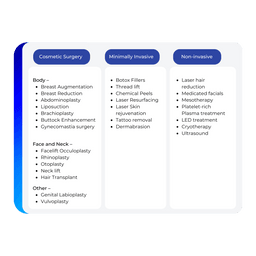
Let us look at how the Aesthetic treatments are divided –
Non – invasive Aesthetic or Cosmetic procedures
Facials, including skin exfoliation, massages, lymphatic drainage massages, superficial ultrasounds, or microdermabrasion for exfoliation, all account for non-invasive procedures. The reason is that the treatment deals with the skin’s most superficial surface (Epidermis).
Minimally Invasive Procedures
When machines deliver treatment to deeper portions of the skin layer (Dermis), the procedures are considered minimally invasive. Injectables, whether done superficially or deep, are in this group.
Cosmetic Surgery or Aesthetic Surgery
Many surgeries are performed on the face, neck, and body for correction and enhancement. Many of these are done under local anesthesia, but most are done under general anesthesia and are elective surgery.
Functional Medicine and Aesthetic Medicine
Antiaging, health, and wellness, including physical and mental fitness, are influenced by bodily functions. Treating “diseases” is not enough; people are getting more involved in self-care and understanding how their bodies function. The aesthetic industry is closely aligned with functional medicine, and it is not surprising that more and more wellness centers and retreats are getting wildly popular.
Aesthetic medicine thrives on biopharma. This means supplements for nutrition, antioxidants, anti-inflammatory, collagen, and tissue regeneration will play a significant role in times to come. As more people go the natural or vegan way, there is scope for newer ingredients in aesthetic medicine.
Here is a comprehensive list of aesthetic procedures across the globe
In time to come, the injectables will gain popularity in every household. The impact of social media has the most significant contribution to this. As more individuals become receptive to aesthetic procedures like injectables, laser hair reduction, radiofrequency, and ultrasound, there is going to be room for everyone to provide something viable to the industry.
There is also a growing demand for non-surgical body contouring treatments. The aesthetic service providers must be well-versed in the evolution of newer technologies for body sculpting and body contouring. Radiofrequency, Cryolipolysis, High intensity-focused electromagnetic, Acoustic wave Therapy, Electric Muscle Stimulation (EMS), and Laser treatments are some technologies used to help patients reach their body goals.
With time and the pace at which researchers are working, we can see a promising influx of products with newer molecules and sustainable ingredients and more likely to leave long-lasting results. We can also be assured that devices with technology that deliver results non-invasively for body contouring and shaping will dominate the market.
If you are a B2B seller of medical aesthetic supplies, you need to write product descriptions in a way that not only entices your customer but keeps them coming back for more.
Product Catalogues
Product catalogues are an important aspect of any online seller’s e-commerce website. They provide potential customers with key information about the products and services offered and can help to create a strong relationship between customer and company.
There are several important aspects to consider when creating a product catalogue, including creative design, customer focus and audience reach. If you are an E-commerce B2B seller, your website is your catalogue!
And just like any other physical catalogue, your customer’s buying journey must be well thought out. It is also important to consider how the customer will browse through the content. In this case, it is a product list. Being a B2B seller, they might already know about products. However, don’t lose the opportunity of providing a good experience.
For example, a product catalogue for an online seller of aesthetic medical supplies would need to be designed differently than one for a brick-and-mortar store. The former would need to be focused on conversion and include high-quality images and clear product descriptions, while the latter could be more creative in nature and provide additional information, such as trivia or customer testimonials. With so many factors to consider, it is important to take the time to plan and create a well-rounded product catalogue that meets the needs of both the customer and the company.
Product Catalogue Images
Product catalogue designs and images are important for online sellers because it is one of the most common ways that potential customers will learn about and purchase their products. An effective product catalogue can help to increase sales, build customer loyalty, and generate repeat business. Good design is especially important for e-commerce businesses, as it can be a key differentiator in a competitive marketplace. Product catalogues should be designed with the target audience in mind and should be visually appealing and easy to navigate.
The use of high-quality images is also essential, as they can help to give potential customers a better sense of the products on offer. When done well, it can be a powerful tool for driving sales and growth for any business.
Key tips for getting good images:
Ensure the images are clear, make sure the brand logo is visible, the colours are consistent, and the specifications on the product are legitimate to read.
You can invest in product photography for your main line of products
Update the images if there is a change in packaging
Some manufacturers permit the usage of images from the websites
Stay consistent; better to have defined guidelines for your website’s product photography
Update the images if there is a change in packaging
Some manufacturers permit the usage of images from the websites
Stay consistent; better to have defined guidelines for your website’s product photography
Product Descriptions
Product descriptions are important in a product catalogue, especially for online sellers, and this is true for website sellers as well. Good product descriptions can help to improve e-commerce sales as they provide customers with the information they need, to make an informed purchase decision.
However, writing effective product descriptions is not always easy. To be effective, a product description should be well-written, accurate and persuasive. It should also be keyword rich to attract the attention of search engines. When it comes to writing product descriptions for aesthetic medical supplies and cosmetic products, it is important to focus on the benefits of the products rather than the features. This is because potential customers are usually more interested in how a product can improve its appearance than in the technical details.
For Aesthetic Products, ensure you have the following :
The brand name, product weight, manufacture details, expiry
It is always tricky to mention the uses and alternative uses as these are subject to discretion, but it is useful to mention them, especially in the case of new products
It also forms an engagement opportunity wherein you can add a call to action for an inquiry
Do mention returns and refunds, storage and other industry-specific details if possible
However, don’t overindulge in the medical or technical aspects of the product unless as described by the manufacturer
Online aesthetic product descriptions have just as much importance as the products themselves. Being a retailer, it is important to leverage social proof to entice your ideal buyer.
Read on to learn how to stand out without biting into your profits in B2B E-Commerce Reselling.
During the last several years, we have all seen dynamic Aesthetic Medicine Market development. We all would like to keep our youthful appearance as long as possible, and treatments slowing down ageing processes are becoming less and less invasive. No wonder new online shops offering a wide range of aesthetic medicine products appear on the market almost daily.
So, how can you, as an eCommerce owner, stand out from that crowd without impacting your margins or using price-dumping solutions? What online marketing tools can be used for building your personal successful business?
Let’s start with the price-dumping effect
Price dumping is a harmful economic practice that is one of the elements of unfair competition. In practice, this term is used for a strategy consisting of the sale of export products at the lowest possible prices, and in extreme cases, dumping is based on product sales at a price which is even lower than the actual production cost.
To prevent price dumping practices, the World Trade Organization (WTO) has the right to impose an anti-dumping charge on products that are being imported to each country. Additional charge, added during importing procedure, cannot be higher than the minimal margin, which constitutes a difference between the individual market value and the importing price.
The authorities of specific member states of the European Union have the possibility to impose a price anti-dumping fee on a specific product or even on a full brand product portfolio.
However, before applying any additional taxes or duties, WTO will be responsible for checking whether, in each case, the price dumping act will have a negative impact on the national industry.
So, considering that price should not be our first tool, how to use all available online marketing opportunities to stay ahead of our competitors and still be fair at the same time? Here are what we think-what are the basic rules.
Build awareness of your brand
Building brand awareness is creating a specific image in the client’s mind. Sounds simple, doesn’t it? But when being active in e-commerce and offering a wide range of products or many brands, you will need to take actions that will make you a reliable distributor in the eyes of your future customers.
Brand Guidelines and Brand image
Your company branding should start from day one – to the stage of creating your online store.
Choosing a proper name, logotype, fonts, and leading colours are, in this aspect, very important. With every decision, keep in mind that all elements should create a consistent image and should evoke clear associations with the industry in which you are active.
User experience
Create a clear, easy-to-navigate website and catchy slogans. In your message, try to highlight the strengths of your eCommerce, which make you stand out from the crowded online environment experience. Adjust your language to the target group, which is your audience.
While running an online store offering products for Aesthetic Medicine professionals, you can bet on a specialized nomenclature and a professional tone of speech.
Be an expert, but only in your field
Show your clients that you are not here by accident! A perfect way to promote your store would be a blog section in which expert articles will be published. Quickly, you will notice that working on such content brings many advantages on many levels while building strong brand awareness of your eCommerce platform.
All well-written articles, particularly those relating to no-mainstream issues, contribute to better recognition and site positioning in the Google bots world. This, in turn, will lead to higher traffic on your website. Furthermore, due to substantive articles that answer the questions of your customers, you will build an image of a specialist who’s surreally worth working with.
Remember – content and messages published on profiles in social media, blogs or newsletters should align with each other, so make sure to keep the message consistent across all communications.
Stand out from the crowd
It is a difficult task, but it is worth the effort. Standing out from the competition will enable you to build a strong image and determine the direction of further marketing actions. Effective client service, fast order execution, and product availability count the most in eCommerce. Consider what makes your company unique in your field and then highlight those advantages in your marketing messages so that the clients can associate them automatically with your online store.
Whenever selling aesthetic medicine products, you certainly realize to what extent the quality of the offered products counts. Choose specific product groups that will become your hallmark and promote them while communicating with your targeted customers.
Lift the veil of secrecy
As we all know, people are curious by nature. While selling aesthetic medicine products, try to reveal as many details related to the offered products as possible. Whenever launching new or innovative items, make sure you have access to all required certificates. When focusing on Ad Sharing knowledge, create a series of posts for Facebook and other dedicated communication channels. Post them regularly at specified time intervals. In each post, highlight the most important information related to the described products, their intended use and treatment effects. Remember that every public post should be accompanied by a proper photo, attracting your recipients’ attention and always add a link taking your followers to your product website page or on your site landing page.
Stay connected!
You should be active online as much as possible. It does not mean that you need to publish posts every day, but do not allow yourself longer breaks. Being connected is a must-have to build long-term relationships and trust. Whenever your activities are occasional and irregular, customers will lose interest and quickly forget you while choosing a more visible and involved with their audience seller.
Content Planning and Social Media
So, how to keep this constant attention? Start with creating a schedule of posts, and plan content for all used social media accounts. If you run a blog, make sure that a substantive article will appear there at least every 3-4 weeks. Think of creating a newsletter, which in most cases, is a great way to maintain contact with the recipients. If you would like to encourage your current and future customers to subscribe, offer them incentives, such as welcome vouchers or additional benefits related to your eCommerce offers.
Nothing strengthens the brand’s reliability more than a recommendation from a person considered an authority within the industry. Cooperation with influencers enables you to reach a specified group of recipients that eventually can become your clients.
While choosing an influencer with whom you will establish cooperation, do not take his/her recognizability (visualised in the number of followers) as the one and only factor. Get to know the person you would like to work with and make sure you trust their skills, beliefs and how they envision the role of Aesthetic Medicine. Be sure that their image is consistent with your eCommerce brand. Whenever possible, choose an expert who works daily with Aesthetic Medicine. Their recommendation will be more reliable and supportive of your online business.
With consistent efforts, one can make their e-commerce website stand out, attract new clients and retain them. There is no reason to hesitate as this may seem a lot. However, it is doable. You can always choose from optimising your website and add efforts to channel more leads through social media, paid advertisements and other digital efforts.
We offer Digital Marketing services that are tailored to E-commerce Aesthetics business. With a global network of verified vendors, we can support you to take your e-commerce business to the next level.
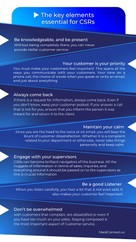
Customer service is the interface where your customer engages with you to exchange information and goods to create sales. It could be technology or a human resource in your organization.
Customer service is the face of your business
Today we are talking about the employees hired in your organisation to take care of your customers to generate sales, get feedback and keep the ship sailing. Customer Service Representatives (CSRs) are the direct link to customers, and they can be incredibly impactful when it comes to sales and the brand value of a company. Starting the year with outstanding Customer Service Experience is essential to ensure your company thrives.
Hire a team or outsource?
Your customer service may be in-house with employees as headcount and part of the organisation or outsourced hire, where the job may be contracted to another company for the same. Either way, it is important to keep your customers satisfied with the service, create feedback loops, and continuously improve your operations. This is also purely a business decision. Hiring well-trained staff can be beneficial as they can add value in many ways, like hiring new trainees and filling in for other gaps in human resources when needed. But if your sales are likely to fluctuate and the nature of your sales is purely transactional, then you can always outsource. However, we must stress more the importance of building long-lasting relationships with clients.
Good enough is not enough
The starting point of good customer service is to know what the industry is standard and what your customers expect as a bare minimum. You see, there are no brownie points for doing just enough. To leave a lasting impression, you must go beyond and deliver the unexpected. Read about how to delight your customers in the article here.
Training for the right function
Divide the knowledge base into segments and develop the training with the most important aspects. In the Aesthetic supplies business, the CSRs must have good industry and product knowledge. They must be constantly updated with the industry trends, new launches, and features of at least the top 10 bestsellers.
Staying organized and not losing sight of the outcomes
There are many ways to improve Customer Service; one way is by training Customer Service Representatives on essential customer service skills such as communication, problem-solving, and attention to detail. Making sure Customer Service Representatives can respond quickly and effectively is an effective way to help create strong customer relationships from the start of the year. Additionally, staying organised and understanding each step in your Customer Service process is key to an efficient Customer Experience strategy that keeps customers happy from start to finish.
Assess the goals laid down and ensure that rigorous training and evaluation is not just once in a year activity. Small tweaks are easier to make than implementing an entire program in a go.
Training needs analysis
But how do you assess what exactly you need to work on? Assessing the training needs of Customer Service Representatives is an essential part of ensuring a high-quality customer service experience. By collecting customer feedback, surveys, and interviews with Customer Service Representatives, you can gain insight into the skills and knowledge needed for customer service excellence.
While many of these functional areas may overlap, careful consideration must be given to the overlap caused to ensure that the key role areas remain consistent. Creating a manual or a handbook to refer to and going back on the basics training is essential to ensure consistency in Customer service all over.
Additionally, keeping track of changes in customer preferences by monitoring social media and market trends can help you to better equip your Customer Service Representatives with up-to-date industry best practices. With research, data analysis and judgment, companies can provide Customer Service Representatives with training that meets the company’s standards and ensures their customers have the best possible experience.
E-commerce training
Aligning customer service with brand value across eCommerce is a great way to create a seamless experience that keeps customers coming back. Crafting excellent customer service tailored to a brand engages customers by helping them understand why they should buy and stick around.
CSRs should be well accustomed to the website and all its components. Clients may sometimes need help finding their way around on your website. The complete stack of details on the website will have SKUs with specifications, company details, contact details, working hours, and email addresses to reach for support. You may add FAQs and contact information of other tech support departments if they are assigned to customer service.
All this information should be well-known by the CSRs.
Measuring and Evaluating Customer Service
Customer service is a critical factor to consider when evaluating the overall performance of a business. Customer Service representatives provide the face and voice of your brand to customers and have a measurable impact on customer loyalty, satisfaction, and future purchases.
When measuring Customer Service performance, it’s important to track metrics such as the number of customer service inquiries answered promptly, the average duration of calls, customer NPS scores, Customer Effort scores and more. In addition to quantitative tracking, Customer Service Representatives should conduct surveys or interviews with customers to gain deeper insights into their experiences. With these approaches in mind, businesses can gain clear visibility into how Customer Service efforts are impacting their business goals and objectives.
Customer service ensures that any interactions with professionals reflect the company’s values, regardless of which platform they are communicating on. Quality customer service also helps establishes trust between companies and consumers while helping to build long-term relationships. Understanding the customer journey, listening carefully to their feedback, and finding ways to improve their experience will help create a loyal customer base across eCommerce platforms.